Showing posts with label ecommerce. Show all posts

Tuesday, May 11, 2010

Internet Retailer Names 2010 Top 10 Retailers


Internet Retailer has named the top 10 internet retailers for 2010 in their annual Top 500 Guide of the most successful internet retailers.

Number one is Amazon which reported $24.51 billion in sales in 2009, up almost 28% from the $19.17 billion sales in 2008.

Here are the Top 10 and their 2009 sales totals. Also included is the percentage of change over the previous year:

  • 1. Amazon (AMZN): $24.51 billion, up almost 28%

  • 2. Staples Inc (SPLS): $9.8 billion, up 27.3 percent

  • 3. Dell Inc (DELL): $4.53 billion, down 6.2 percent

  • 4. Apple Inc (AAPL): $4.25 billion, up 16.7 percent

  • 5. Office Depot (ODP): $4.1 billion, down 14.6 percent

  • 6. Wal-Mart.com (WMT): $3.5 billion, up 19.8 percent

  • 7. OfficeMax (OMX): $2.78 billion, down 10 percent

  • 8. Sears Holdings Corp. (SHLD): $2.77 billion, up 3 percent

  • 9. CDW Corp. (CDW): $2.47 billion, down 5 percent

  • 10. Best Buy (BBY): $2.45 billion, up 20 percent
According to Internet Retailer, the Top 10 accounted for more than 45% of all U.S. online sales in 2009.

The Top 10 accomplished this by:

  • Strong name recognition and brand awareness;

  • Focusing their efforts on their most loyal customers last year;

  • Offering large quantities of merchandise;

  • Offering lots of discount deals and

  • Providing a superior online shopping experience.
Amazon remains on the top due to their excellent customer service.

Friday, May 7, 2010

Internet Retailer Conference And Exhibition 2010 - June 8 to 11

Hear the Nation's Top Retail Experts

The speaker roster for the Internet Retailer Conference and Exhibition 2010 represents the largest group of expert speakers ever assembled in online retailing. The 175 speakers at IRCE 2010 represent all industry segments that conduct e-retailing operations. Such diversity of speakers is one of the hallmarks of IRCE, and it explains why its conference agenda appeals to all players in e-retailing. Simply put, the IRCE agenda covers e-retailing from a wide variety of perspectives and shows bias toward none.

This year's Internet Retailer Conference keynote speaker is Imran Jooma, Senior Vice President and General Manager, E-Commerce, Sears Holdings Corp., who will discuss Sears' extensive e-commerce strategy, which includes not only web sites but also mobile commerce and a far-reaching social media effort. He will tell attendees how that approach prepares Sears for today's always-connected but careful spending consumer—and how that strategy will enable Sears to take market share in the new retailing world.

Featured Speaker Dennis McEniry will talk about how Estee Lauder took its premium worldwide beauty brand to 300 web sites in 29 countries with $100 million in annual sales and grew it to become Estee lauder's fastest growing sales channel and a major contributor of bottom-line profits.

Featured Speaker Geoffrey Robertson will discuss how the century-old auto-parts retailer Whitney Automotive became an Internet business as a way to shore up its fading prospects. Featured Speaker Tony Ellison will talk about how he leveraged the advantages of being a small online-only retailer to grow sales in the recession while his bigger office supply competitors were shrinking.

Largest Display of E-Commerce Technology

Propelled by such significant and steady growth of conference attendees, IRCE has always been the favorite show for e-commerce vendors, who know they will be exhibiting their solutions in a high-traffic exhibit hall. As a result, IRCE's exhibit hall has always boasted the largest display of e-commerce technology in the world with more booths than all other U.S. e-retailing events combined. IRCE 2010 will be no exception. Its 170,000-square-foot Exhibit Hall will house the exhibits of 375 e-commerce solution providers who collectively account for three-quarters of the e-commerce technology market, making the information available in the Exhibit Hall as compelling as that provided in the conference sessions.
Click Here For More information And To Register Online.

Wednesday, May 5, 2010

"Faux" Is NOT A Legal Qualifier For Pearls


The FTC has strict guidelines regarding precious metals and gemstones. They are located here: http://www.ftc.gov/bcp/guides/jewel-gd.shtm .

It is often that you will find sellers on various venues improperly listing their jewelry items. We have pointed out the FTC guidelines, rules, regulations and etc. to several of these marketplaces in hopes of educating the sellers. It seems no matter what, the FTC information we provide these sites is ignored.

Yesterday, we received a newsletter from one marketplace that bothered us. We have brought this subject up in their forums only to be blasted by irrate sellers and blown off by staff. Even after the entire FTC info was sent, the sellers on this site continue to list their jewelry incorrectly.

This is the section of the newsletter that bothered us:
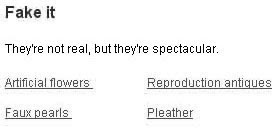
Not only does it show that the improper terminology is still being used by the sellers on the site, it also proves that the sites' own newsletter is not using legal qualifiers to describe jewelry items in the above links it provided. It is as though the site is laughing at the FTC.

In case you are unsure of which words in the above graphic are incorrect, they are - "Faux pearls". The other terms, such as "Reproduction antiques," appear odd to us also but we know little about those topics so we are addressing the topic we are sure of.

When we clicked on the link provided in the newsletter, we found over 1400 listings for the term "faux pearl" BUT they did not have the proper qualifier in the title. When opening the listings, most did not mention that the pearls were not real but they continued to use the term "faux pearl" throughout.

According to the FTC:

§ 23.18 Definitions of various pearls.

As used in these guides, the terms set forth below have the following meanings:

(a) Pearl: A calcareous concretion consisting essentially of alternating concentric layers of carbonate of lime and organic material formed within the body of certain mollusks, the result of an abnormal secretory process caused by an irritation of the mantle of the mollusk following the intrusion of some foreign body inside the shell of the mollusk, or due to some abnormal physiological condition in the mollusk, neither of which has in any way been caused or induced by humans.

(b) Cultured Pearl: The composite product created when a nucleus (usually a sphere of calcareous mollusk shell) planted by humans inside the shell or in the mantle of a mollusk is coated with nacre by the mollusk.

(c) Imitation Pearl: A manufactured product composed of any material or materials that simulate in appearance a pearl or cultured pearl.

(d) Seed Pearl: A small pearl, as defined in (a), that measures approximately two millimeters or less.

§ 23.19 Misuse of the word "pearl."

(a) It is unfair or deceptive to use the unqualified word "pearl" or any other word or phrase of like meaning to describe, identify, or refer to any object or product that is not in fact a pearl, as defined in § 23.18(a).

(b) It is unfair or deceptive to use the word "pearl" to describe, identify, or refer to a cultured pearl unless it is immediately preceded, with equal conspicuousness, by the word "cultured" or "cultivated," or by some other word or phrase of like meaning, so as to indicate definitely and clearly that the product is not a pearl.

(c) It is unfair or deceptive to use the word "pearl" to describe, identify, or refer to an imitation pearl unless it is immediately preceded, with equal conspicuousness, by the word "artificial," "imitation," or "simulated," or by some other word or phrase of like meaning, so as to indicate definitely and clearly that the product is not a pearl.

(d) It is unfair or deceptive to use the terms "faux pearl," "fashion pearl," "Mother of Pearl," or any other such term to describe or qualify an imitation pearl product unless it is immediately preceded, with equal conspicuousness, by the word "artificial," "imitation," or "simulated," or by some other word or phrase of like meaning, so as to indicate definitely and clearly that the product is not a pearl.


§ 23.20 Misuse of terms such as "cultured pearl," "seed pearl," "Oriental pearl," "natura," "kultured," "real," "gem," "synthetic," and regional designations.

(a) It is unfair or deceptive to use the term "cultured pearl," "cultivated pearl," or any other word, term, or phrase of like meaning to describe, identify, or refer to any imitation pearl.

(b) It is unfair or deceptive to use the term "seed pearl" or any word, term, or phrase of like meaning to describe, identify, or refer to a cultured or an imitation pearl, without using the appropriate qualifying term "cultured" (e.g., "cultured seed pearl") or "simulated," "artificial," or "imitation" (e.g., "imitation seed pearl").

(c) It is unfair or deceptive to use the term "Oriental pearl" or any word, term, or phrase of like meaning to describe, identify, or refer to any industry product other than a pearl taken from a salt water mollusk and of the distinctive appearance and type of pearls obtained from mollusks inhabiting the Persian Gulf and recognized in the jewelry trade as Oriental pearls.

(d) It is unfair or deceptive to use the word "Oriental" to describe, identify, or refer to any cultured or imitation pearl.

(e) It is unfair or deceptive to use the word "natura," "natural," "nature’s," or any word, term, or phrase of like meaning to describe, identify, or refer to a cultured or imitation pearl. It is unfair or deceptive to use the term "organic" to describe, identify, or refer to an imitation pearl, unless the term is qualified in such a way as to make clear that the product is not a natural or cultured pearl.

f) It is unfair or deceptive to use the term "kultured," "semi-cultured pearl," "cultured-like," "part-cultured," "pre-mature cultured pearl," or any word, term, or phrase of like meaning to describe, identify, or refer to an imitation pearl.

(g) It is unfair or deceptive to use the term "South Sea pearl" unless it describes, identifies, or refers to a pearl that is taken from a salt water mollusk of the Pacific Ocean South Sea Islands, Australia, or Southeast Asia. It is unfair or deceptive to use the term "South Sea cultured pearl" unless it describes, identifies, or refers to a cultured pearl formed in a salt water mollusk of the Pacific Ocean South Sea Islands, Australia, or Southeast Asia.

(h) It is unfair or deceptive to use the term "Biwa cultured pearl" unless it describes, identifies, or refers to cultured pearls grown in fresh water mollusks in the lakes and rivers of Japan.

(i) It is unfair or deceptive to use the word "real," "genuine," "precious," or any word, term, or phrase of like meaning to describe, identify, or refer to any imitation pearl.

(j) It is unfair or deceptive to use the word "gem" to describe, identify, or refer to a pearl or cultured pearl that does not possess the beauty, symmetry, rarity, and value necessary for qualification as a gem.

Note to paragraph (j): Use of the word "gem" with respect to cultured pearls should be avoided since few cultured pearls possess the necessary qualifications to properly be termed "gems." Imitation pearls should not be described as "gems."

(k) It is unfair or deceptive to use the word "synthetic" or similar terms to describe cultured or imitation pearls.

(l) It is unfair or deceptive to use the terms "Japanese Pearls," "Chinese Pearls," "Mallorca Pearls," or any regional designation to describe, identify, or refer to any cultured or imitation pearl, unless the term is immediately preceded, with equal conspicuousness, by the word "cultured," "artificial," "imitation," or "simulated," or by some other word or phrase of like meaning, so as to indicate definitely and clearly that the product is a cultured or imitation pearl.

§ 23.21 Misrepresentation as to cultured pearls.

It is unfair or deceptive to misrepresent the manner in which cultured pearls are produced, the size of the nucleus artificially inserted in the mollusk and included in cultured pearls, the length of time that such products remained in the mollusk, the thickness of the nacre coating, the value and quality of cultured pearls as compared with the value and quality of pearls and imitation pearls, or any other material matter relating to the formation, structure, properties, characteristics, and qualities of cultured pearls.

******************************************

We wish that the owners of all sites would take this issue more seriously and make their sellers list properly. It is all about consumer protection and if a site intends to hold any credibility, they should follow all of the laws, rules, regulations and guidelines as they pertain to them and the products represented on their sites. They shouldn't simply pick and choose which one's they are going to follow.

Tuesday, May 4, 2010

Where Do Missing Packages Go? Mail Theft Does Happen

Most online sellers have had buyers who have contacted them because their package is slow to arrive or has failed to arrive. Sometimes it is a case of another family member picking up the mail and forgetting to let the buyer know that it has arrived, it may be a case of being impatient or whatever. Then of course, once in a very great while, it is someone trying to get two items for the price of one. At any rate, things may not always be as they seem.

We have only had one serious incident with USPS in all of our years selling online. That was when 8-10 packages turned up missing and when we contacted the PO, they said that a whole truck of mail was abandoned in a mountain pass in the dead of winter. We never saw the mail again, the buyers never got the mail and in the end, all were refunded, including us.

After what happened today, we have realized that there is another twist that can take place.

Today, we got some USPS shipping supplies. We were not around when the mail carrier arrived so they left them on the front step. Under the supplies were 3 priority mail envelopes.

We were horrified when we opened them.

One was a priority mail box that we sent 12-08-07
One was a 4 X 8 bubble mailer we sent 12-08-07
The last one was a 4 X 8 bubble mailer we sent 02-09-08

All had been torn open with the contents missing.

USPS enclosed the same letter in each package. We were just sick.

Here's the letter:

Dear Postal Customer:

The enclosed mail piece was recovered recently from an abandoned storage unit in Sioux Falls, South Dakota. We believe that the storage unit was used by a suspect in a mail theft prior to his arrest. On June 19, 2009, that suspect was convicted and sentenced to one year imprisonment for the violation of Title 18 USC 1702, Obsrtuction of Correspondence.

Our investigation is now closed. This letter is to inform you that we no longer require custody of the enclosed mail piece and are returning the mail to you. It is apparent that your mail piece was tampered with and that some or all of the contents are missing. We have worked as best as we can to match any loose contents to the appropriate mail piece but have not always been successful.

If you have experienced a financial loss due to the theft of the enclosed mail, please enter a mail theft complaint at www.postalinspecors.uspis.gov or call the Postal Inspection Service at (877) 876-2455, option 3. If you believe you may have been the victim of identity theft, please contact one of the following credit reporting agencies to place a fraud alert on your account:

Equifax (800) 525-6285
Experian (888) 397-3748
TansUnion (800) 680-7829

We regret any loss and inconvenience this may have caused you. Please be assured of our continued attention to the security of mail while in the custody of the U.S. Postal Service.

Sincerely,
Handwritten Signature Here
Joseph P Schneiders
Postal Inspector

After thinking about it, this means that the mail disappeared while in USPS custody. It did not happen after it was delivered, it happened right here in Sioux Falls after we sent it on it's way. It never got out of town and all of it was headed for cities on the different coasts.

It is hard to believe that this kind of thing can happen but low and behold, it happened to us.

We don't remember these particular pieces and will have to go through our records to see what the items were and go about filing the complaints as necessary. It sure seems odd that USPS never contacted us in all of this time. The one who stole the mail is due to get out of jail next month, if he hasn't already.

We wonder:

Why didn’t USPS let us know something earlier so we could advise our customers? We didn’t have to tell them what happened as far as the exact details but just to give them a heads up that there was a problem.

The way this was handled, the customers likely thought we may have been less than truthful with info about the package.

It just seems that 2.5 years after the first packages disappeared and just before the culprit that stole the packages gets out of jail is, at the very least, a little bit late.

Why wasn't any of this on the local news or in the newspapers? It was such a hush, hush deal that even those that were victims had no idea about it until now.

Sellers don’t always watch all of the Delivery Confirmation or tracking info on their packages until they arrive to the customer. After all, they have tons of other things they need to be doing but it appears that sellers should check the Delivery Confirmation and tracking on all of their packages from now on if they don't already.

When a buyer contacts the seller claiming that their package has not arrived, this is another scenario that the seller may want to consider when trying to locate the item.

Friday, April 30, 2010

OTA Publishes 2010 Online Safety Honor Roll Citing Adoption of Consumer Protection Best Practices


8% of the Leading Companies Make the Grade

Washington, DC – April 22, 2010 – The majority of consumer websites remain vulnerable to online fraud, even as growing numbers of businesses deploy online safety measures, according to a new survey announced today by the Online Trust Alliance.

The annual survey of best practices to help protect consumers from the onslaught of forged email, phishing sites and malware found of the 1,200 companies analyzed, only 113 qualified to be named to the OTA Online Safety 2010 Honor Roll. The survey examined 1,200 domains and analyzed 500 million email messages purporting to come from the Fortune 500, Internet Retail 500, top 100 financial Institutions in North America and consumer facing federal government web sites. Sites were evaluated based on their usage of email authentication standards and Extended Validation SSL Certificates (EV SSL) and the presence of malware.

While 92% of the companies failed to adopt these best practices, 14% Internet Retail 500, 13% of the top 100 financial institutions and 6% of the Fortune 500 passed. Only 3% of the top consumer facing government sites made the grade, while 29% of OTA members walked the talk, demonstrating their commitment and leadership to locking out online fraud.

“Security has always been a top priority for PayPal, and we appreciate OTA's acknowledgement of our efforts to provide millions of customers around the world with a safer online payment service," said Michael Barrett, chief information security officer of PayPal. “We support OTA's efforts to drive industry adoption of standards that make the Internet safer for consumers and look forward to continued collaboration."

2010 Honor Roll Report

Appendix & Honor Roll Company Listing

Highlights:

8% (113 companies) earned entry into the OTA 2010 Online Safety Honor Roll, for their adoption of EV SSL Certificates, one or more forms of email authentication and successful scan for malware.

Over 26% of the Internet Retail 500 and top 100 financial services companies have adopted EV SSL certificates.

Worldwide growth of EV SSL certificates has exceeded 90%, growing to 23,000 deployments.

26% of leading financial institutions (FIs) have adopted EV SSL, and 51% adopted email authentication, a growth of 13% in one year, yet only 13% have adopted both recommendations.

OTA members lead in embracing best practices with over 98% adopting email authentication and nearly 32% adopting EV SSL.

14% of the Internet Retail 500 and 13% of the Top 100 FIs have adopted both email authentication and EV SSL certificates.

The largest retailers and businesses continue to show the highest level of adoption of email authentication with 76% of the Internet Retail 100 and 54% of the IR 500.

Government agencies adoption of email authentication remains stagnant at 32%, while over 60% of their sites and/or email have been spoofed in the past four months.

“While major corporations, banks, governmental agencies and industry working groups talk about best practices, the majority are failing to adopt, risking demands for added regulations,” said Craig Spiezle, Executive Director and President of the OTA.

OTA has recognized several “North Stars,” organizations demonstrating commitment to best practices, industry collaboration and consumer education. Leaders include Apple Computer, Cisco Systems, Microsoft, Internal Revenue Service, Social Security Administration, Charles Schwab, Bank of America, eBay, Microsoft and PayPal.

“These organizations are to be commended for their security and privacy leadership and commitment to self-regulations, helping drive others to do the same,” Mr. Spiezle said. “Not only do their consumers benefit, but so do their employees and stockholders.”

OTA is calling on all consumer financial institutions, commerce sites and consumer facing governmental agencies to implement EV SSL certificates, email authentication and complete daily site scans for malware and vulnerabilities by September 1, 2010. It the belief those brands who do so, will increase consumer protection and trust while demonstrating a commitment to self regulation.

Updates to this report will be shared at the Online Trust & Cybersecurity Forum at Georgetown University on September 22-24, 2010.

https://otalliance.org/dc.html

* Percentage adjusted for companies who are on one or more list.

Tuesday, March 2, 2010

ClickandBuy Takes Payments On Facebook


Facebook users will be able to use a payment application called Buxter which was developed by online payment provider ClickandBuy.

Users are able register and load their Buxter E-wallet in Euros or US dollars with a limit of 50 €.

Facebook users can transfer, receive and request money from other Facebook users through Buxter free of charge. For 1.9%, with a minimum of 2 € or $3 - they can withdraw money from their ClickandBuy accounts.

Christian von Hammel-Bonten, Senior VP, Head of Product Management, ClickandBuy says: "From now on, Facebook users can not only share their status and pictures, they can also share real money in a way that is fast, easy and secure."

Charles Fraenkl, CEO, ClickandBuy says: "Buxter is the application that will see Facebook members use the platform not just as a way to stay in touch but also as a fast, easy and secure way to exchange money or buy and sell products and services."

ClickandBuy, founded in 1999, is one of the leading online payment services. The ClickandBuy Group claims to have crossed the billion euro threshold in revenue in 2009. Over 16,000 online traders use ClickandBuy’s e-payment system for their e-commerce, retail, online entertainment, and paid content & services billing, including Apple iTunes, Vodafone, Deutsche Telekom, Telefónica, Orange, msn, AOL, Meetic, Parship, Electronic Arts (EA), Codemasters, Napster, McAfee, Panda, AutoScout24, RTL, Playboy, Financial Times Deutschland, Foto.com, Deutsche Boerse Group, KPMG, Yamaha, Digital River, Redcoon, bonprix.

Postal Service Outlines 10-Year Plan to Address Declining Revenue, Volume


USPS released an announcement of their future plans today that could affect online sales.

Click here to read what Postmaster General John E. Potter said.

Click here to read what the president of the National Association of Letter Carriers, Fredric Rolando, said in response to the proposed plan.

Artfire - Handcrafted eCommerce Website


We have been watching several ecommerce sites for quite awhile. We have to say that we really enjoy visiting ArtFire. There are many wonderful, unique, handcrafted items and the site is easy to navigate. We feel that the site is worth sharing with our readers.

Here is info from their site:

About ArtFire

ArtFire is an e-commerce solution that connects buyers and sellers of handmade and vintage goods as well as digital arts and craft supplies. ArtFire provides sellers all the benefits of a venue while offering the customization, control and features of a personal website. Our members are free to link to their other profiles on the web, including other selling venues, because we do not believe in limiting what our members do with their studios. Add in best-in-class selling, promotional, and learning tools and you have the most powerful artist-focused site on the web.

ArtFire is pioneering a process we've termed Community Directed Development to put our company leaders and developers in direct interaction with our community of artisans. We use their feedback and open discourse to build a site in real time. By using this feedback, we can innovate quickly by building new tools and guiding the site in a direction that best serves our community's interests.

Industry-First Features

Although ArtFire is less than a year old, we have several industry-first selling tools that we offer to all of our members, both basic (free accounts) and pro.

ArtFire Rapid Cart
Rapid Cart - The ArtFire Rapid Cart is a revolutionary new way for our members to do business. Any member can use the Rapid Cart on any site that can accept Flash. This tool pushes the POS to customers, effectively creating remote-sale-capable advertising. When a member posts a Rapid Cart they are off of ArtFire. The Rapid Cart can show items for sale that the artisan has selected or pull randomly from their shop. What makes the Rapid Cart special is that the buyer never has to leave the blog/website that they were originally on. When a buyer clicks on a product in a Rapid Cart, a new pop-up item window is opened where the buyer can, without signing up for an account on ArtFire, complete the entire checkout process. All of this takes place without the buyer ever having to navigate to ArtFire. The entire process is secured using 256-bit encryption, and everything is tracked by ArtFire so that our members can run their businesses with the most accurate data possible.

Facebook Kiosk
Facebook Kiosk - The ArtFire Facebook Kiosk is a one-of-a-kind Facebook application that allows any pro ArtFire member to import their studio and sell their goods right from their Facebook profile or fan page. Once the application is linked to a member's studio there is no more work to be done, the kiosk auto updates as changes are made to a member's studio. Much like the Rapid Cart, the Facebook Kiosk allows anybody to shop and checkout without leaving Facebook. Buyers are not required to sign up for an account during the process, which allows members to market their work to their fans, friends and family while also selling on the largest social networking site online.

ArtFire Coupon Codes
Coupon Codes - While coupon codes in e-commerce are a staple of the industry, the ArtFire Coupon Code system is the first fully customizable coupon building system available to an artisan marketplace. ArtFire members can make coupon codes that apply to any item, entire orders, studio categories, or specific items. They can choose from dollar off discounts, percentage off discounts, free shipping or free gift options. Every coupon can be set for a limited run date, set to run in the future, set to limited uses, or be valid for up to a year. The coupon code system also offers the ability to issue Gift Certificates that are tracked by ArtFire and make for great gifts on holiday occasions.

Market Hub
Market Hub - The ArtFire Market Hub is a tool we provide all of our members to help build their brand online. When a member updates their Market Hub, it allows shoppers that artisan's other web presences; the Market Hub is a tool we provide so that our members can link out to their own website, blog, Etsy shop, Flickr, Facebook, Twitter, You Tube Profile, Indie Public, or MySpace profile. We believe our members should have multiple profiles and selling venues so we built Market Hub as a way for our members to tie their profiles together. Market Hub improves credibility and trust for artisans and helps them to overcome one of the common obstacles to online sales-uncertainty for buyers.

Google Base Submission

Auto Google Shopping Base Feed and Currency Conversion - When a member lists a product for sale on ArtFire, we automatically feed that product to Google Base shopping; this allows our members' products to appear in searches on the popular Google Shopping search engine. ArtFire also provides auto currency conversion for international shoppers. ArtFire recognizes where each visitor is located based on IP address and converts the sales prices to local currency using current conversion rates.

Our Story

ArtFire's story starts with our founder, John Jacobs. His story is best told in his own words:

"I grew up in a family of crafters; both my mother and father ran a jewelry supply business that had our family traveling around the country to craft shows just trying to make a living. In 1999 the internet provided my parents the opportunity to move their business off the road and sell their supplies on eBay. After I got out of the military (Air Force), I started several companies, one of which was a jewelry supply company which continued my family's tradition

My wife and I started Foxyfindings.com and became triple titanium power sellers on Ebay within several years selling beads and jewelry making supplies; along the way I learned some powerful lessons about how to choose a marketplace and what can happen when a venue puts share holders first and opts for profits over service to customers.

My inspiration behind ArtFire came as I watched how my customers, independent jewelry makers, were being treated by eBay. I grew tired as I watched the arbitrary ways that eBay and other venues handled their customers, not treating them as business partners. I noticed what seemed to be a "tax" on creativity with insertion/final value fees. I thought there should be a better option, a selling venue that treated its members with respect and recognized them as business partners. I founded ArtFire because, as a seller myself, I never found a venue that understood its role was to SERVE its members."

You can meet the rest of the ArtFire team by visiting the staff page.

ArtFire went into open beta in November 2008, since then we have experienced rapid growth at a rate of 2600%, and we are still growing. Our company's core principles are based on providing the best e-commerce tools we can for our customers and supporting them with unmatched customer service.

Tuesday, February 23, 2010

Amazon Rated Most Trusted US Brand By Customers


Milward Brown's new report states that consumers have rated Amazon.com to be the top performing brand in the United States.

Milward Brown's research was done in connection with The Futures Company. The report - "Beyond Trust: Engaging Consumers in the Post-Recession World" introduces "TrustR," a new metric for understanding the relationship between consumers and brands.

TrustR calculations are reached by looking at consumer responses to questions such as "how trustworthy is this brand?" and "would you recommend this brand?". Then the scores are indexed and added together to reach a TrustR score. An average score is 100, and anything over 105 is considered a good score.

Amazon scored 123, FedEx 122 and Downy, Huggies, Tide, and Tylenol all scored 120. Toyota, WebMD, Pampers and UPS scored well and followed closely behind.

"When a person recommends a brand they put their own personal trust and credibility on the line. They are only willing to recommend brands which themselves have proven reliable and trustworthy," said Nigel Hollis, EVP and Chief Global Analyst of Millward Brown.

"Amazon.com, the brand ranked first in the U.S. by TrustR, has achieved that status through exceptional service and providing its own recommendations to users. This combination has made Amazon the gold standard of trust and recommendation in the U.S."

Click here to read the report's press release.

Click here to read the summary of the whole report.

Saturday, February 20, 2010

PestaShop For Stand Alone Websites - It's FREE!


PrestaShop is an interesting, relatively new open-source software for you to create your own stand alone website. They just released 1.3.0 Beta but if you are going to use this software, use the previous version, 1.2.5. They are still working out the bugs in the 1.3.0.

We haven't officially started tinkering with this software yet but we have read many reviews on it. Most people state how easy it is to implement. If you have issues, you can always go to PrestaShop forums for help. It is a lively community with plenty of helpful people around. There are even some members who are willing to set up your shop for you at a reasonable cost.

We are going to use PrestaShop for our newest store.

PrestaShop also offers stores on their website for a fee. We haven't considered that option but the information on that topic is as follows:

Prestabox is a turnkey e-shop that you can set up in 10 minutes. Don't pay attention to the technical side, just sell. Hosting on high performance servers.

Just fill your shop name in the field and follow instructions. Customize your e-store with all PrestaShop included features.

Change graphical appearance, fill your products in your catalog, create promotions, optimize SEO and etc... When your catalog is ready, open your shop and make your first sales! Follow and track your customers with complete statistics built-in tools to optimize your e-shop to sell more and more!

Start at 1% of your sales and a minimum of 15€ from the 10th month.

PrestaShop™ is a professional e-Commerce shopping cart software that you can download and use for free.
The big advantage of open-source software: you're never 'locked' to expensive commercial software.

Our dedicated team and growing user community join forces to fix bugs and add new functionality at a rate proprietary software companies can rarely claim. Join the Open Source revolution!

Shop owners appreciate PrestaShop's easy-to-use Back Office tool for adding and fine-tuning their storefronts (Front Office). With new & sophisticated Back-Office functionality added regularly, shop owners don't need to rely on others to make their Front Office look and act the way they want it to.

Developers appreciate the clean structure of PrestaShop code that they can easily adapt to their client's needs for quick turn-around. Thanks to its use of CSS and transplantable module blocks, the PrestaShop e-Commerce Solution can be customized for small or medium-sized businesses working within tight deadlines.

Despite its technical sophistication and advanced functionality, the PrestaShop e-Commerce Solution is very light (around 6 MB not including translation files), so it's easy to download, install, and update.

PrestaShop is so lightweight and speedy, even customers with slow connection speeds will enjoy buying from you!

On the Web, appearances matter. In many cases, you really can judge a Website by its cover!

The PrestaShop e-Commerce Solution was built to take advantage of essential Web 2.0 innovations such as dynamic AJAX-powered features and next-generation ergonomy. PrestaShop guides users through your product catalog intelligently and effortlessly, turning intrigued visitors into paying customers.

FEATURES:

Front Office - Your website that the pulic sees

Special deals (price reductions, gift vouchers)
Featured products on homepage
Top sellers on homepage
New items on homepage
'Free shipping' offers
Cross-selling (Accessories)
Product image zoom
Order out-of-stock items
Customer subscription & user accounts
Unlimited payment methods
Payment by bank wire
Google™ Checkout module
Cash-On-Delivery (COD)
Preconfigured for Paypal™
Multiple-recipient contact form
Product tagging & tag cloud
Search
Merchandise return (RMAs) & credit slips
Package tracking
Offer gift-wrapping & recycled packaging
PDF customer invoice
Shopping Cart recall
Sale of services & virtual goods
Custom Favicon
RSS feed
Newsletter opt-in
'Pick up in-store' option
Customized product (text and images)
Wishlist
Loyal customer program
Affiliate program
Sponsor-a-friend benefit program
Customer product reviews

Back Office - The administrative area of your site

Unlimited categories & subcategories
Full-featured WYSIWYG text editor
Unlimited product attribute combinations
Unlimited product specs
Unlimited images with automatic resizing & file optimization
Unlimited currencies
Unlimited tax settings
Unlimited carriers & destinations
Tax by state, country, both, zones, or no taxes
Digressive pricing (Quantity discounts)
Real-time currency exchange rates
Inventory management
SMS/Text-message alerts
Add/delete function modules
Bar codes
Contextual help
Attribute Combo Generator
Delivery status notification e-mails (customizable)
Unlimited languages & dialects
Import/export language translations
13 default language translations
Search Engine Optimization (SEO)
Friendly URLs / Permalinks
100% modifiable graphic themes
Back Office users & permissions (ACL )
Maintenance Mode
Minimum order amount
Newsletter contact export
Alias search
Bulk lister/import .CSV files
SSL (Secure Sockets Layer) encryption
Visitors online
Content Management System (CMS)
Reports
Customer groups

COMING SOON:

Product comparison
Advanced search
FAQ module
Multiple Shops
Printable shipping label
1-click purchase
Per-item shipping cost
Download catalog as PDF
Export products as .CSV file

Click here to go to the PrestaShop website.

Saturday, September 5, 2009

BuyItSellIt Store - Tour Video


If you would like to open a reasonably priced online store, BuyItSellIt is a site you don't want to miss.


Saturday, August 22, 2009

Important Things To Consider In An eCommerce Venue


We have watched with great amusement, the various online venue forums as members celebrate and all of the rah-rah each time their member count goes up by 1000, as their listing count pushes them up the ladder at PSU and as they bet on what the listing or member count will be by a certain date. We keep wondering why these sites find these numbers so fabulous. Are these things really important for an online selling venue? Should we be impressed? What do these numbers really mean? Which eCommerce venue is better? Are these numbers important when choosing or continuing on an online venue? What is the truth behind these numbers?

Choices

Some people may decide they are further ahead to have their own stand alone site while others prefer to join an online marketplace of multiple sellers. What works for one merchant may not work for another. When it comes to choosing an online venue or deciding whether or not to continue with one, there are many things to consider.

Having your own stand alone eCommerce site is nice but you will have to know HTML coding and sometimes more advanced coding. You will need to know how to fix it when the site crashes or is hacked. Selling on your own site is rewarding because you decide what you are doing, rules and guidelines are not created by a marketplace owner.

You can become familiar with a multi-seller marketplace by reading their online forums and the help files the site offers. Take your time and snoop around. When we are shopping around for a venue to add, if a site looks like it could be viable and the terms of service are acceptable, we lurk in the forums for months before committing. You can learn a lot about a site and it's members just by reading. And remember, online, all you have is your reputation to help create buyer trust in you. If a site appears that it could seriously tarnish your reputation, you may want to continue your site search.

If you have decided to sell on one of the many marketplaces, you need to decide what your goal is. Are you going to sell as a hobby or are you going to sell to make a living? If selling online is going to be a hobby, or you have a niche item, you should locate a niche site that suits your items and selling style needs.
If you plan to make a living with your online selling, the best advice we can offer is to diversify.
Do not put all of your eggs in one basket.


In choosing a multi-seller platform, the following factors are important to consider:

What types of items are represented on the site you are considering and what are you planning to sell? Are they compatible? If not, you need to continue investigating.

Computer skills are a must and are required at various levels on multi-seller platforms. Do you have the skills to navigate the site?

What level of support is offered? Support can mean the success or the failure of an online seller. If the site is not attentive of it's members, then you may want to move on.

If there is a forum attached, what goes on there? Is the activity there acceptable and will it help generate sales or will it push potential buyers away?

What does it cost to sell on the site you are considering? There a many online venues that are free while there are just as many that have fees. Are the fees going to cause selling on the site to be unprofitable? Will the site generate enough buyer traffic to make it worth paying fees?

It takes time to take pictures (crop and manipulate them), to create listings and to promote the venues you are selling on. Do you have the time to invest in your new venue or venues? Does the site self promote or is that left up to the invidual sellers? What about Google Base feeds, who is responsible for creating and maintaining them?

What payment options are offered? Most online shoppers know how to use PayPal and Google Checkout but do not forget those shoppers who do not wish to give their personal details out - a site that allows checks and money orders will offer those shoppers the option they need to make a purchase. The more payment options available, the better chance you will have of making sales.

After checking out various sites, you need to determine if one site will be enough to meet your sales goals. If not, you may want to sell on several sites - most serious and successful merchants sell at many venues.

Does the site offer a means to help merchants with inventory control? If not, what programs or type of bookkeeping will you need to do it yourself and what is the cost of it?
You Found A Site, Now What?

When you have found a site, you should read all of the rules in the help section. Take time to know as much as you can about the site. If you still have questions, most sites have some kind of forum to ask questions and if all else fails, contact their customer service or support department.

There is no need to think that you have to list all of your products at one time or rush through creating your listings. Make your listings at your own pace, keeping them professional and offer plenty of details about your items. Make sure that you use good quality pictures like there is no description and write a description like there are no pictures. Multiple views are also helpful with 3-D products. Be sure to include your TOS and policies so a potential buyer knows what to expect from you.

Be sure to be attentive to your customers needs. Answer emails promptly and courteously. Package your items as if they are going to be used in a game of football. Ship the product purchased in the manner and timeframe as stated in your listing. Always use a form of online viewable tracking - what it is called depends on the carrier you use.

So What Is All Of The Hoopla About Member And Item Counts?

Well, the best we can figure out - that is all it is, just hoopla. While it does take a large membership and millions of items to be listed to create a sustainable multi-seller platform, those numbers really mean very little or nothing at all.
None of those numbers will ensure sales or a merchant's success.

Some of the largest venues according to membership and / or item counts have the least buyer traffic. There are sites with high counts, including great traffic, but they fail to convert that traffic into sales. Other venues have artificially inflated counts and even the visitor traffic and page views can be - and sometimes are manipulated so it shows on analytical sites as though more people are going to the site than what actually are, among other falsely inflated statistics.

** The most important numbers in online sales are the number of sales made and total dollar amount generated from those sales within a certain timeframe (usually quarterly).
Finding those two numbers on most sites is either very difficult or impossible to find. It's too bad that more sites do not openly share these numbers as they are really the only numbers for merchants to gauge the viability of a site and they are the only numbers that are truly worthy of celebration (they are the only true measure of online selling success). That is why it is important to thoroughly investigate a site and listen to what other merchants say about a site (several merchants, not just a few). Remember to lurk any prospective site's forums, there is a wealth of information waiting there for you.

Wednesday, August 12, 2009

Extreme E-tail: Sell the Product, Sell the Search, Sell the Space


By John Federman
E-Commerce Times
08/12/09 4:00 AM PT


The holidays are months away, but e-tailers should already be well under way in planning how to best take advantage of the November/December traffic surge. Now is the time to look at ways to drive your site's incremental revenue with tactics like adapting brick-and-mortar practices to the Web and monetizing your in-site search results page.

Click here to read the rest of the article. article.